
MediaINFO Digital Library · the archive platform national libraries, archives, publishers and broadcasters run on their own infrastructure.
Search beyond the language of the archive.
Describe what you are looking for, in your own words. Get the archive's own evidence, not guesses.
Sheikh Zayed in December 1971 — English → Arabic · French · English
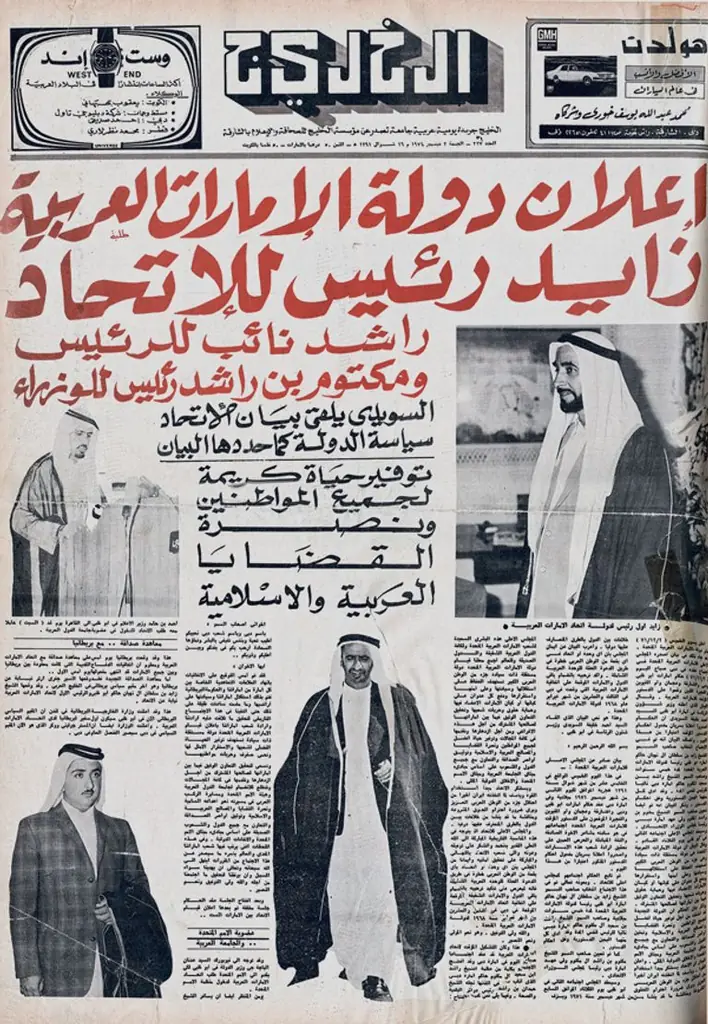
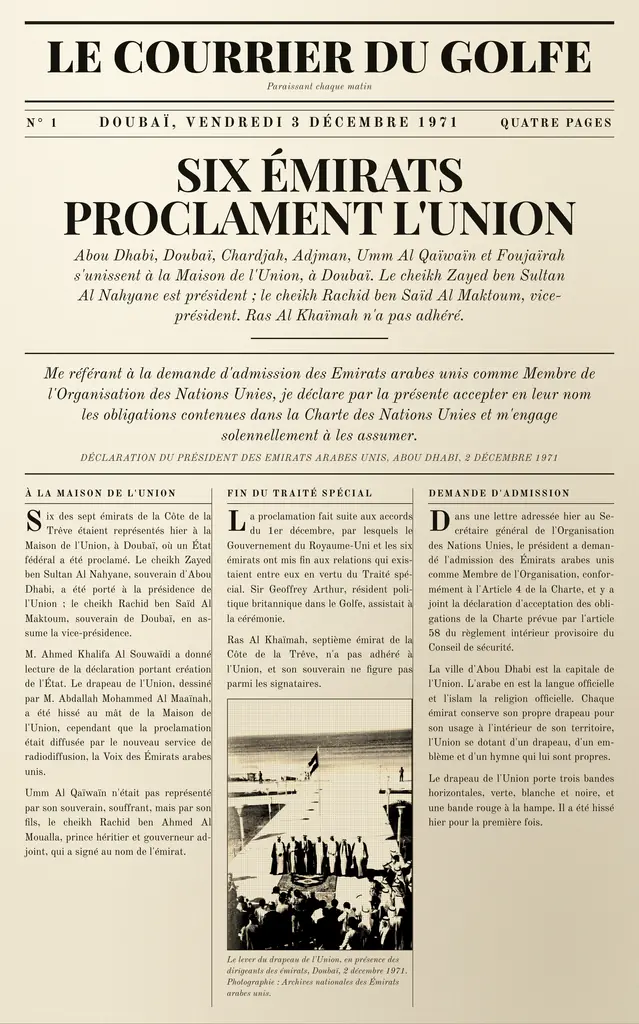
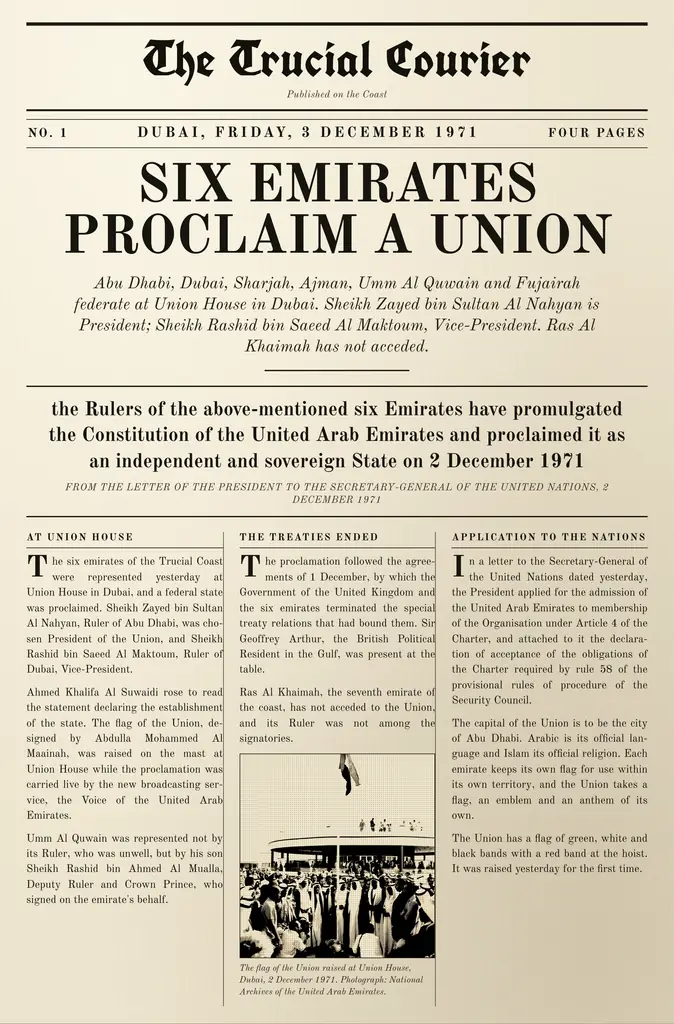
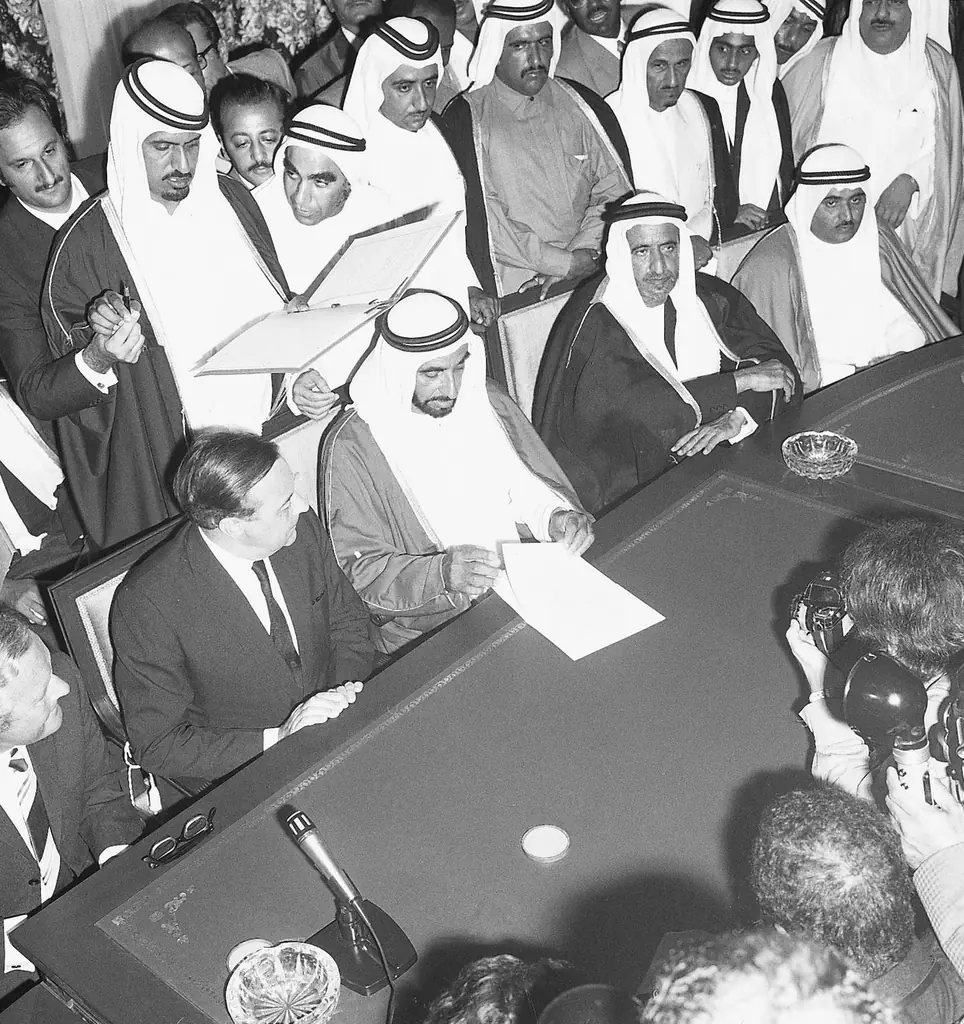
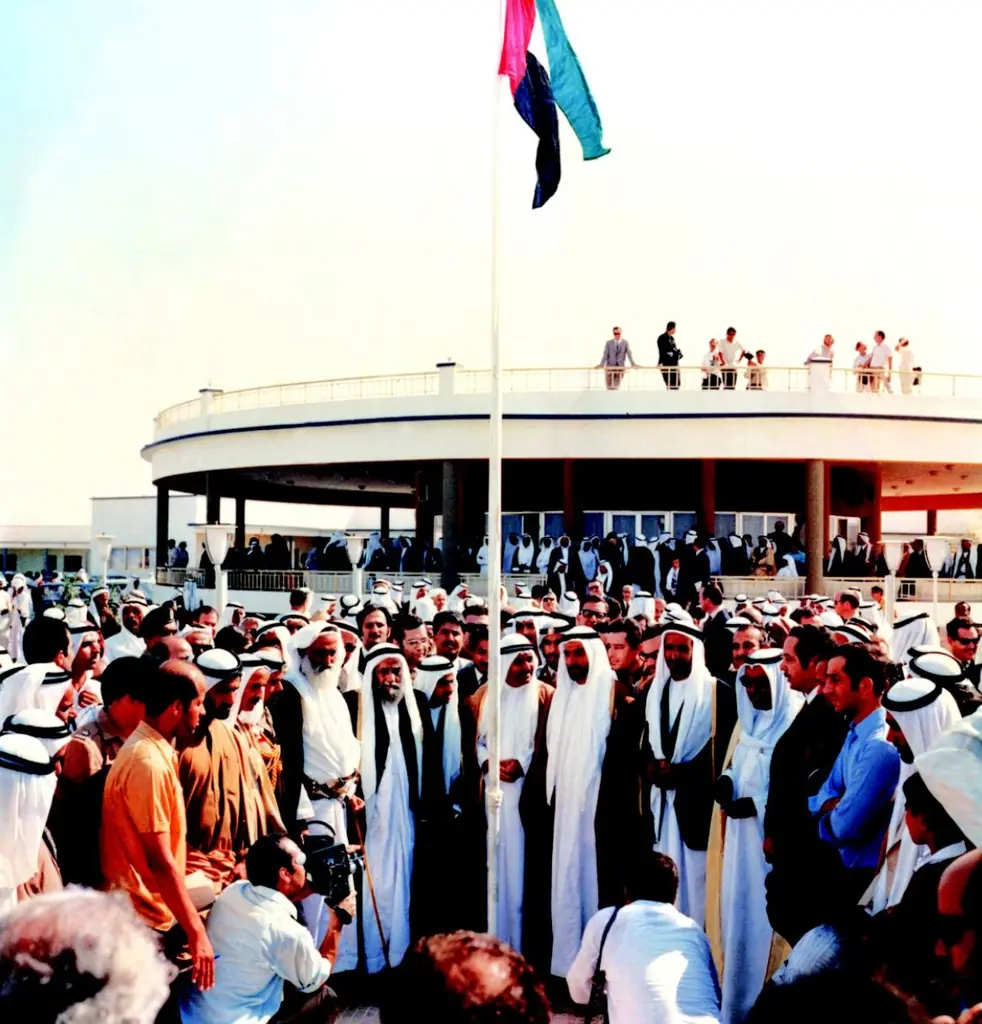
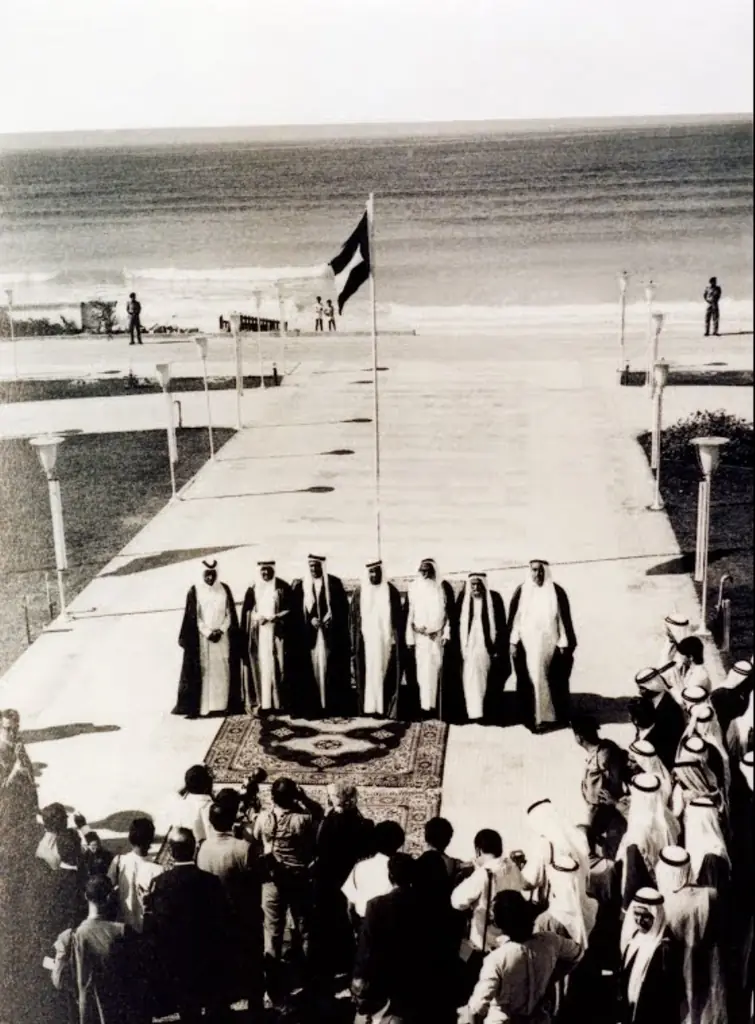
A request in plain words becomes a search. “Sheikh Zayed in December 1971” is typed in English and reaches material in Arabic, French and English. Three pages light up: front page (Arabic) · 3 December 1971; une (French) · 3 décembre 1971; front page (English) · 3 December 1971. The photograph — The declaration of the establishment of the state read at Union House, Dubai — is checked for faces: Sheikh Zayed bin Sultan Al Nahyan · from the person record; Sir Geoffrey Arthur · from the person record; face · not yet named; 10 more faces are boxed and left unnamed. The record — Letter of the President to the United Nations · 2 December 1971 · from the official record — is read line by line: “the Rulers of the above-mentioned six Emirates have promulgated the Constitution of the United Arab Emirates and proclaimed it as an independent and sovereign State on 2 December 1971”, and “sovereign State” is lit where it is written. Lines connect the request to the evidence. The request became a search — person Sheikh Zayed, date December 1971, each a filter that can be removed — and it found 5 items: Three front pages, a photograph and the declaration — in Arabic, French and English.
The stance
AI can interpret the archive. The archive remains the authority.
- The original object stays intact: every derivative is kept beside it, and preservation-grade holdings keep their originals and lossless images.
- Intelligence is a layer on top — added beside the object, never written into it.
- What AI derived is marked as derived, so a researcher always knows which is which.
Discovery
Discovery in four moves.
Four things a reader can do on the first afternoon, on material the institution already holds.
On the stage: the English search “president of the union” is typed and matched against the translation stored beside the newspaper, and the passage «زايد رئيس للإتحاد» lights up where it is printed — Arabic, transcribed and translated: Zayed, president of the union.
On the stage: the photograph · 2 December 1971 with 3 faces found — Sheikh Zayed bin Sultan Al Nahyan · from the person record; Sir Geoffrey Arthur · from the person record; face · not yet named.
On the stage: the waveform of the recording of 12 March 1933 — Fireside Chat 1, on the banking crisis — radio address from the White House, Franklin D. Roosevelt, President of the United States — the words “for all legitimate purposes, the phantom of fear will soon be laid.” landing in time, and “legitimate” found at 8:45.
On the stage: the request “Sheikh Zayed in December 1971” is typed in plain words and becomes a search — person Sheikh Zayed, date December 1971, each shown as a filter that can be removed. 5 items come back — Three front pages, a photograph and the declaration — in Arabic, French and English; three of them are shown: front page (Arabic) · 3 December 1971; une (French) · 3 décembre 1971; front page (English) · 3 December 1971.
Speed
Two thousand pages, on screen in two seconds.
Open an item with thousands of pages and every page is there at once, ready to zoom into. The previous generation of the viewer needed four minutes for the same item.
- 2,350 pages
- every page of one item, on one canvas
- 2.3 seconds
- to show them all, down from 244.8
- 0.55 MB
- sent to the browser, a hundredth of the 55 MB before
Display
The whole collection, on one canvas.
An item's pages, or a collection's photographs, sit on one continuous canvas. As you zoom, the viewer fetches only what is on your screen, at the depth you are looking, and each picture sharpens to the finest detail your screen can show, so moving between them is a pan, not a load.
- Magazine 40 · 127 frames
- AS11-40-5903
- Buzz Aldrin · person record
- Neil Armstrong, reflected
1,406 photographs of one mission, every one public domain; the tiles you see loading are the same tiles the platform serves.
The canvas is worked with the keyboard once it is held: the arrow keys move across it, plus and minus zoom, Home returns to the whole mission, and Escape — or the Release control — lets the page go on.
The 1,406 photographs of the Apollo 11 mission, July 1969, laid out in film-magazine order on one square canvas 38 frames across. The chapter descends from the whole mission into magazine 40 — the 127 frames of the surface walk — then into the frame AS11-40-5903, Buzz Aldrin standing beside the lunar module, and finally into his visor, where Neil Armstrong and the module are reflected. Four further frames are drawn at close range: AS11-40-5875, AS11-40-5878, AS11-40-5886 and AS11-44-6552. Every photograph is a NASA original in the public domain.
The platform underneath
Six things an archive has to do.
Discovery is the visible half. Underneath it sits the foundational platform the institution runs every day.
- OrganizeStructure that mirrors the institution, not the software.Collections and sub-collections that follow your own arrangementDescription in the fields your cataloguers already useBulk import and bulk editing, with every original kept as received
- EnrichUnderstanding added on top of the object — and marked as added.Text recognised from scanned pages and photographs — printed or handwritten, in either reading direction, with every word placed on the pagePages resolved into their articles, each with the order a reader reads it in — in either directionNewspaper name, issue date and issue number read off the page — in Hijri or Gregorian, with the other calendar's date beside itSpeech transcribed with timings, so a result is a momentCaptions, tags and translations kept beside the object, never inside itVideo indexed by what changes on screen, with chapters from the transcript when licensedFaces detected and matched to person records; public-people packs, available in certain countries and regions, provide automatic name labelling, with aliases, of thousands of public figures.
- DisplayOne viewer for every kind of material in the collection.Deep zoom on high-resolution images and scanned pagesVideo, audio, documents and 3D objects on the same surfaceTwo objects side by side, panning and zooming together
- InteractMaterial you can work with, not only look at.Regions drawn and annotated directly on a page or photographDuplicates found inside any search — the same file twice, a rescan, a crop, a copied passage — and compared side by sideFilters, saved searches and personal shortlistsKeyboard-first navigation for people who are in the archive all day
- ReuseThe material leaves in the form the work needs.Download presets your administrators define — original, web copy or PDFResolution limits and watermarks applied per presetAn editor for assembling, reordering and re-describing items
- SharePublishing outward on the standards the sector already uses.Harvesting over OAI-PMH, in Dublin Core and Europeana metadataStandard image delivery, so partners render your images in their viewersStructured data on public pages, so catalogues are read correctly
Built for institutions
Different collections. Different first problems.
The platform is one system; what matters most differs by the kind of institution running it.
National libraries and archives
Millions of pages, many of them in scripts and languages the reading room no longer speaks.
Museums and heritage
Objects, photographs and documents that have to be shown as carefully as they are kept.
Universities and research
Special collections that only earn their keep when researchers can actually reach into them.
Publishers and newspaper archives
A century of print that is only worth digitising if a journalist can find one paragraph in it.
Broadcasters and moving image
Hours of footage where the thing you need is thirty seconds long.
Government and private collections
Records that must stay on your own infrastructure, and sometimes off the network entirely.
Deployment
Runs where your archive lives.
On your own infrastructure, on your own terms, including with no way out to the network at all.
Runs on your infrastructure
Installed on your own servers; your material, your metadata and your users stay inside your perimeter.
Air-gapped when it must be
No outbound connection at all, by configuration: releases arrive as signed offline bundles.
Upgrades in place, rolls back on its own
Updates are offered, never applied unattended; a release that does not prove itself is reverted automatically.
References
Some of the institutions we are proud to serve, across Europe, the Gulf, Africa and beyond.









































A selection, not the full list: many of the institutions we work with cannot be named because of the nature of their work.
See it on your own material.
A guided demonstration on our demo server, with a few items from your collection if you wish.